
“21 For to this you have been called, because Christ also suffered for you, leaving you an example, so that you might follow in his steps. 22 He committed no sin, neither was deceit found in his mouth. 23 When he was reviled, he did not revile in return; when he suffered, he did not threaten, but continued entrusting himself to him who judges justly. 24 He himself bore our sins in his body on the tree, that we might die to sin and live to righteousness. By his wounds you have been healed.”
1 Peter 2:21-24
The oldest depiction of Christ can be found in Rome, scratched into a wall on the Palatine Hill, likely dating to around AD 200 (the Alexamenos graffito). What makes this image even more striking than its age is that it is not an image of devotion, but of mockery. A Roman, perhaps a soldier or classmate, sought to insult a Christian named Alexamenos by drawing him worshiping a crucified figure with the head of a donkey, alongside the words: “Alexamenos worships his god.”
1 Peter 2:21-24
The oldest depiction of Christ can be found in Rome, scratched into a wall on the Palatine Hill, likely dating to around AD 200 (the Alexamenos graffito). What makes this image even more striking than its age is that it is not an image of devotion, but of mockery. A Roman, perhaps a soldier or classmate, sought to insult a Christian named Alexamenos by drawing him worshiping a crucified figure with the head of a donkey, alongside the words: “Alexamenos worships his god.”
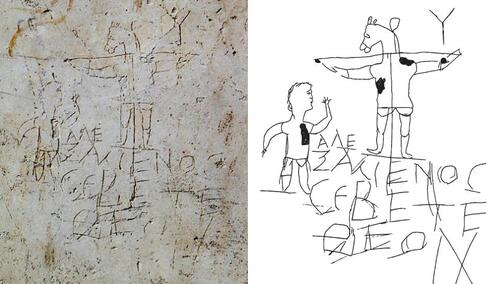
To the ancient world, suffering was shameful. Crucifixion was not merely execution—it was degradation. Weakness. Humiliation. Certainly not something worthy of worship. And yet, there stands the Alexamenos, mocked for bowing before a crucified Lord.
Until Christ, no one would have imagined a God who willingly endured such suffering. Yet, this is exactly what Scripture shows us:
“For to this you have been called, because Christ also suffered for you, leaving you an example, so that you might follow in his steps.” 1 Peter 2:21
Christ did not merely suffer—He faithfully endured.
He endured without sin:
“He committed no sin, neither was deceit found in his mouth.” (v.22)
He endured without retaliation:
“When he was reviled, he did not revile in return.” (v.23)
He endured with unwavering trust:
“He continued entrusting himself to him who judges justly.” (v.23)
And He endured with purpose:
“He himself bore our sins in his body on the tree…” (v.24)
This is not passive suffering, not helplessness. This is faithful endurance: a deliberate, trusting submission to the will of the Father.
When we suffer, we instinctively look for escape—and in many cases, that is right and good. But Christ shows us something deeper. In the garden, He prayed that the cup might pass from Him—the cup of God’s righteous wrath against sin. Yet, when the moment came, He did not run.
He could have called down legions of heavenly armies. He could have silenced His accusers, struck down His captors, and ended it all in an instant…but He didn’t.
He endured the betrayal.
He endured the arrest.
He endured the false trials.
He endured the scourging.
He endured the cross.
He endured death.
And He did so in perfect trust: entrusting Himself to the Father who judges justly. Why? Because He was not merely enduring suffering...He was bearing sin.
“…that we might die to sin and live to righteousness. By his wounds you have been healed.” (v.24)
The world looked at the cross and saw weakness. God declares it as the very power of salvation.
Peter does not give us this picture merely to admire, but rather to follow.
“Christ also suffered for you… so that you might follow in his steps.” (v.21)
We are not called to atone for sin—that work is Christ’s alone. But we are called to walk the same path of faithful endurance:
To endure without sin.
To refuse retaliation.
To trust God’s justice over our own.
To entrust ourselves to the Father, even when suffering feels unjust.
This Easter, as we reflect on the cross, may we not only see what Christ endured for us, but learn how to endure because of Him.
The world may still mock, but may we join Alexamenos: worshiping the Lord who suffered for us and following in His steps.
Until Christ, no one would have imagined a God who willingly endured such suffering. Yet, this is exactly what Scripture shows us:
“For to this you have been called, because Christ also suffered for you, leaving you an example, so that you might follow in his steps.” 1 Peter 2:21
Christ did not merely suffer—He faithfully endured.
He endured without sin:
“He committed no sin, neither was deceit found in his mouth.” (v.22)
He endured without retaliation:
“When he was reviled, he did not revile in return.” (v.23)
He endured with unwavering trust:
“He continued entrusting himself to him who judges justly.” (v.23)
And He endured with purpose:
“He himself bore our sins in his body on the tree…” (v.24)
This is not passive suffering, not helplessness. This is faithful endurance: a deliberate, trusting submission to the will of the Father.
When we suffer, we instinctively look for escape—and in many cases, that is right and good. But Christ shows us something deeper. In the garden, He prayed that the cup might pass from Him—the cup of God’s righteous wrath against sin. Yet, when the moment came, He did not run.
He could have called down legions of heavenly armies. He could have silenced His accusers, struck down His captors, and ended it all in an instant…but He didn’t.
He endured the betrayal.
He endured the arrest.
He endured the false trials.
He endured the scourging.
He endured the cross.
He endured death.
And He did so in perfect trust: entrusting Himself to the Father who judges justly. Why? Because He was not merely enduring suffering...He was bearing sin.
“…that we might die to sin and live to righteousness. By his wounds you have been healed.” (v.24)
The world looked at the cross and saw weakness. God declares it as the very power of salvation.
Peter does not give us this picture merely to admire, but rather to follow.
“Christ also suffered for you… so that you might follow in his steps.” (v.21)
We are not called to atone for sin—that work is Christ’s alone. But we are called to walk the same path of faithful endurance:
To endure without sin.
To refuse retaliation.
To trust God’s justice over our own.
To entrust ourselves to the Father, even when suffering feels unjust.
This Easter, as we reflect on the cross, may we not only see what Christ endured for us, but learn how to endure because of Him.
The world may still mock, but may we join Alexamenos: worshiping the Lord who suffered for us and following in His steps.
No Comments